







Generator AVR (Automatic Voltage Regulator): What It Does, How to Choose the Right One & Where to Buy
What Is a Generator AVR? (Quick Answer)
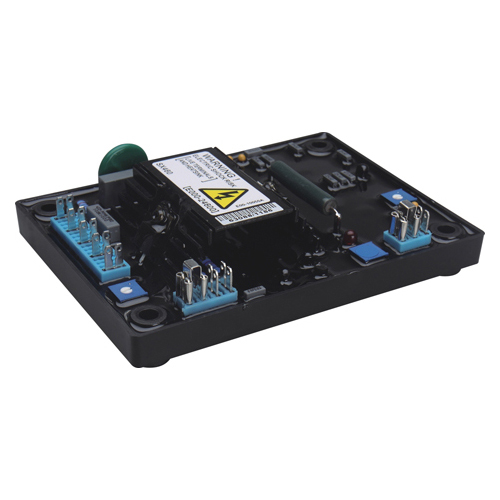
An AVR for a generator is an automatic voltage regulator and an electronic controller board that ensures your generator's output voltage remains consistent. The AVR measures the voltage output from the alternator and then adjusts the current to the exciter field. Failure to have a functional AVR will result in voltage spikes, sags and collapses.
Key takeaways
- The AVR is the "brain" that holds voltage stable as load goes up and down.
- The right AVR depends on your alternator brand, excitation type (self-excited or PMG), sensing and frequency (50 Hz / 60 Hz).
- Common failure signs: no voltage build-up, over-voltage, low voltage, hunting (voltage swinging), or voltage dropping under load.
- Always match the AVR to your alternator nameplate or manual before ordering. If unsure, send us the alternator model and we will confirm.
How Does an AVR Work?
An AVR works in a simple closed loop:
- Sense: it measures the generator's output voltage (single-phase or three-phase sensing).
- Compare: it compares that reading with a fixed reference setting.
- Correct: it raises or lowers the DC current to the exciter field.
- Stabilize: the alternator's output returns to the set voltage within a fraction of a second.
Most AVRs also have protection and adjustment features such as a voltage trimmer, a stability trimmer, and under-frequency roll-off (UFRO), which reduces voltage if engine speed drops so the alternator is not overloaded.
Signs Your Generator AVR Is Failing
| Symptom | What it usually means |
|---|---|
| Generator runs but no voltage output | AVR not exciting the field, or lost residual magnetism |
| Output voltage too high | Faulty sensing or failed AVR output stage |
| Output voltage too low | Weak AVR output, bad connection, or wrong settings |
| Voltage swings up and down (hunting) | Stability setting off or AVR component aging |
| Voltage collapses when load is applied | AVR cannot supply enough excitation under load |
| Burning smell or overheating board | Damaged components, moisture or overload |
Note: these symptoms can also come from the engine, wiring or alternator windings, so a technician should confirm the AVR is the cause before replacing it.
Types of Generator AVR: Self-Excited vs PMG
The excitation system of your alternator decides which AVR fits:
- Self-excited alternators take their excitation power from the main output. These usually use SX-type AVRs such as SX440 and SX460.
- PMG-excited alternators use a permanent magnet generator for a more stable supply, which helps with motor starting and short-circuit performance. These typically use MX-type AVRs such as MX321 and MX341.
- Auxiliary-winding / PMG systems often use AS-type AVRs such as AS440 and AS480.
- Other brand families (Leroy Somer R450, Marelli, Marathon, Basler, Siemens and more) use their own AVR designs.
Always confirm against your alternator nameplate or manual, because similar-looking AVRs are not always interchangeable.
How to Choose the Right AVR for Your Generator
Use this checklist before you order:
- Alternator brand and model: Stamford, Leroy Somer, Marelli, Mecc Alte, Marathon, Basler and others each use different AVRs.
- Excitation type: self-excited, PMG or auxiliary winding.
- Sensing: single-phase or three-phase voltage sensing.
- Frequency: 50 Hz or 60 Hz (many AVRs have a selectable link or setting).
- Existing AVR part number: the number printed on the old board is the fastest way to match.
- Mounting and connectors: hole spacing, terminal layout and size should match your panel.
- Quality and testing: choose a supplier that tests boards and can provide samples and support.
Fast shortcut: send us a photo of your old AVR and your alternator nameplate on WhatsApp. We will tell you the matching model.
Popular Generator AVR Models at HXL
| Model | Typical use | Product page |
|---|---|---|
| SX440 / SX460 | Self-excited Stamford-type alternators | SX440, SX460 |
| MX321 / MX341 | PMG-excited Stamford-type alternators | MX321, MX341 |
| AS440 / AS480 | Auxiliary-winding or PMG Stamford-type alternators | AS440, AS480 |
| R450 | Leroy Somer-type alternators | R450 |
Browse the full range by brand:
- Stamford Series AVR
- Leroy Somer Series AVR
- Marelli Series AVR
- Marathon Series AVR
- Basler Series AVR
- Siemens Series AVR
- Meccal Te Series AVR
How to Replace a Generator AVR (Safe Overview)
Replacement should be done by a qualified technician.
- Stop the generator and isolate the starting system so it cannot start.
- Take a clear photo of the wiring and label each wire.
- Remove the old AVR and compare it with the new one (model, terminals, mounting).
- Fit the new AVR and reconnect the wires exactly as before.
- Set the frequency link/setting, then start with no load and adjust the voltage trimmer to the rated voltage.
- Apply load gradually and fine-tune the stability trimmer if the voltage hunts.
Why Buy Your Generator AVR from HXL
HXL Generators & Parts Co., Ltd. supplies automatic voltage regulators for all major generator brands from Fu'an City, Fujian, China.
- Wide brand coverage: Stamford, Leroy Somer, Marelli, Marathon, Basler, Siemens, Mecc Alte, Cat and more.
- Custom sizes available for special requirements.
- Free sample support so you can test before a bulk order.
- Fast shipping worldwide for distributors, workshops and generator set builders.
- Matching help: send your alternator model and we confirm the right AVR before you pay.
Get Your AVR Quote Today
Send your alternator model, old AVR number and quantity and we will reply with price and lead time.
WhatsApp: +1 205 413 6228
Email: via the Contact page
Frequently Asked Questions About Generator AVRs
What does an AVR do in a generator?
It keeps the output voltage constant by automatically adjusting the exciter field current as the load changes.
What happens if a generator AVR fails?
The generator may produce no voltage, over-voltage, low voltage or unstable voltage, which can damage connected equipment.
Can I run a generator without an AVR?
Technically it may run, but voltage will not be controlled, so it is unsafe for sensitive or important loads.
How do I know which AVR fits my generator?
Match the alternator brand and model, excitation type, sensing, frequency and the part number on the old AVR. Send us these details and we will confirm.
What is the difference between SX460 and MX321?
SX-type AVRs are generally used on self-excited alternators, while MX-type AVRs are generally used on PMG-excited alternators. Check your alternator manual before ordering.
How long does a generator AVR last?
There is no fixed life. Heat, vibration, moisture and electrical stress all matter, and many AVRs run for years when installed and cooled properly.
Can one AVR be used for 50 Hz and 60 Hz?
Many AVRs have a frequency selection link or setting. Confirm your specific model.
Do you supply AVRs for bulk orders and distributors?
Yes, we offer custom sizes, free samples and fast shipping for distributors, workshops and generator builders.


